


This is a notification message.

The world celebrates World Photography Day on August 19 of each year, celebrating the art of photography and its role in documenting moments and preserving human memory. The press photograph acquires an exceptional status as the eye of truth and the memory of events; it does not merely capture the moment, but turns it into a visual document capable of encapsulating details that entire pages of text might fail to convey.
The camera is no longer merely a tool for capturing beautiful moments, but has become a means of documentation and a visual witness to historical events. A photograph may summarize details that full pages of texts cannot convey, and over time, it may transform into a document that helps understand what happened and rebuild its details.
This occasion acquires special importance this year amid the escalating global debate on the ethics of generative artificial intelligence and its impact on photography, especially press photography. In a world where billions of photos are taken daily, the photographer's responsibility combines artistic skill with a professional and ethical commitment to preserving "visual truth."
The roots of celebrating Photography Day date back to 1839, when the Daguerreotype technique, developed by the Frenchman Louis Daguerre, was announced in Paris, opening the door to fixing photographic images in a way that was not previously available.
Since that date, the camera has undergone enormous technical transformations, yet the essence of the photograph has remained constant: retaining the moment and recording it in memory.
The camera, which in its early days required special equipment, chemical materials, and a long time to produce a single image, has today become an essential part of the phone carried by billions of people.
With the proliferation of smartphones and social media platforms, photography is no longer a craft practiced solely by specialized photographers, but has transformed into a daily practice documenting the details of both ordinary and exceptional life.
Billions of Photos Daily Recent estimates indicate that the world may capture about 1.95 trillion photos during 2026, meaning more than 5.3 billion photos daily, and about 222 million photos per hour.
These figures reflect the scale of the transformation that the culture of the image has witnessed in recent decades; the photograph, which in the past was a rare event, today records the minutest details of daily life: a street, a trip, a child, a match, a party, an accident, a demonstration, or a war.
Smartphones have become the main source for the vast majority of photos captured around the world, after the camera moved from the photographer's bag to the user's pocket, without this meaning the disappearance of specialized cameras, which still retain their place in professional, press, and artistic photography.
The historical paradox lies in the fact that what the world produces in images over a short period today far exceeds the volume of photographic production that was possible over long decades in the last century, which reflects the radical transformation in the status of the image within daily life.
The Image Becomes News In journalistic work, a single photograph from the scene of an event can summarize the scale of destruction, reveal the faces of victims, or record details that are difficult to describe in dozens of paragraphs.
In wars, disasters, and protests, a photograph can turn years later into a historical document that helps researchers and journalists reconstruct what happened and understand its repercussions.
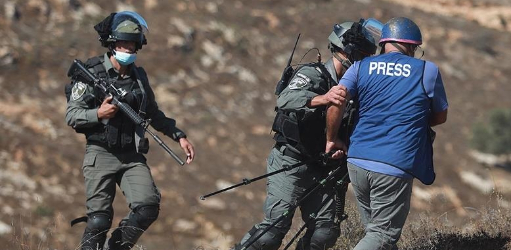
Despite the enormous change in photographic tools, the press photographer has remained at the heart of media work. In many conflict zones, photographers and journalists pay the price for being in the place where others search for news.
Journalists Under Danger The year 2025 was a bloody year for journalists. According to UNESCO data, 93 journalists were killed during the year, including 60 journalists in conflict zones. In contrast, the International Federation of Journalists counted the killing of 128 journalists and media workers during 2025. Behind every number is a story, and in a number of these stories, the camera was present.
A photographer entering a war zone does not carry a ready-made image in their memory; rather, they enter to return with what they witnessed. The photograph they capture may be the only remaining record of an event that the world did not witness directly.
Since the beginning of 2026 until August 19, specialized international sources have documented the killing of photographers and camera operators during their journalistic work in Gaza and Lebanon. In 2025, dozens of photographers and camera operators were killed while performing their journalistic work around the world, with the largest number of documented cases in Gaza.
Thus, World Photography Day celebrates more than just a technical or aesthetic development; it celebrates the role of the image in preserving memory, uncovering the truth, and documenting history. While the world's capacity to produce images expands to unprecedented levels, the true value of the image remains tied to its ability to be honest and responsible, and capable of telling future generations: This is how the world was at that moment.
تستقبل نساء غزة يوم الأم...
تواصل الآلة الإعلامية الإسرائيلية حربها...