


This is a notification message.
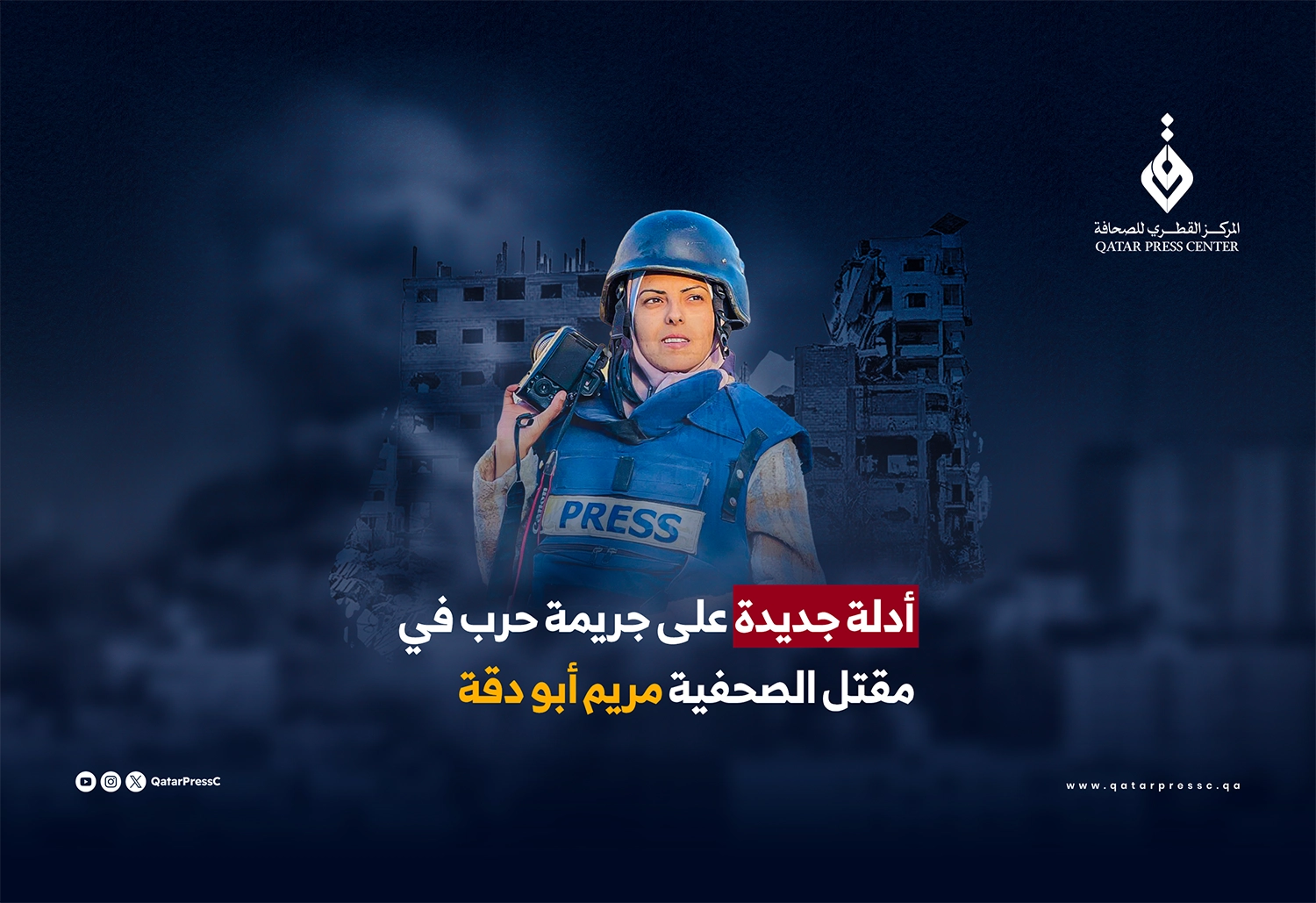
The Independent published an extensive investigation into the martyrdom of Palestinian journalist Mariam Abu Daqqa, who was killed in a double airstrike targeting Nasser Hospital in the Gaza Strip on August 25, 2025, questioning whether the circumstances of the attack amount to a war crime.
The investigation, co-authored by Bel Trew, Ezzedine Al-Akah, and Nidal Hamdouna, provides a detailed narrative of the journalist's final hours, the conditions preceding the targeting of the hospital, alongside testimonies and analyses raising questions about the nature of the attack and its objectives.
Abu Daqqa, 33, worked for Independent Arabia and the Associated Press, and was staying with other female journalists in a partially damaged building in Khan Younis, after the war forced families into repeated displacement.
In her final days, despite grief and exhaustion, she continued her work; she missed her only son Ghaith, 14, whom she managed to send abroad for treatment, and was grieving the loss of her mother, who died of cancer in May 2024 amid war conditions and a lack of treatment, while her father was suffering health issues after she donated one of her kidneys to him before the war.
The Last Will Driven by a constant sense of danger, Mariam secretly left a will for her son with her journalist friend Baraa Lafi, and three days before her martyrdom, she sent a voice message to her editor-in-chief warning him that she might be forced to displace for a fourth time.
Meanwhile, life inside Nasser Hospital was unfolding under extremely harsh conditions; its wards were overcrowded, and the smells of death and decomposition filled the place, while a number of international paramedics were forced to leave to participate in a training course outside the hospital.
In the hospital courtyard, which had turned into a camp crowded with displaced people, journalists set up a large tent that became a shelter for professionals who had lost their homes. Among them was Reuters photojournalist Hossam Al-Masri, who feared for his camera from the heat of the sun and the disruption of the live broadcast.
According to the investigation, the camera cited by the Israeli narrative was used for live broadcasting from Khan Younis, while Reuters confirmed that the Israeli army was aware of the presence of its teams inside the hospital.
Israeli Claims Prior to the attack, Samaher, Hossam's wife, was talking to him on the phone while he stood near his camera. Minutes later, the connection was cut off, and explosions shook the place. The first shell hit the northern side of the hospital, while the second targeted the outer staircase on the fourth floor at a time when journalists and civilians were gathering to search for the injured and victims.
After the first strike, Baraa Lafi rushed out, while Mariam was about to gather her belongings and head to the scene to cover the developments, as was her habit of being at the forefront of field journalists.
When it became clear that Mariam was among the victims, her colleague Amanda Nasser, who had left the hospital to participate in the training course, collapsed.
She expressed her belief that evacuating foreign paramedics from the hospital before targeting it raises serious questions about the timing of the attack.
In contrast, the Israeli army presented a narrative stating that the target was a camera placed by Hamas to monitor Israeli forces, whereas statements by journalists, doctors, and witnesses showed, according to the investigation, that the camera was designated for live broadcasting.
Legal Questions To bolster the investigation, the Independent used audio analysis, projectile trajectory data, satellite imagery, and weapons experts' analyses. These data concluded, according to the newspaper, that the second shell was fired from a position about 2.5 kilometers northeast of the hospital, where tanks were stationed.
Weapons experts identified fragments found at the attack site as parts of a 120 mm Israeli tank shell.
These findings raised legal questions regarding the principles of distinction and proportionality in international humanitarian law. International law professor Kevin Jon Heller said the evidence could allow the prosecutor to conclude that war crimes occurred, including the intentional targeting of civilians and launching a disproportionate attack, especially in the second strike.
He pointed to the absence of any attempt to warn the hospital or give it time to address any alleged problem, questioning the proportionality of using two high-explosive shells against the declared target, which was destroying a camera.
Female Journalists' Sacrifices The tragedy of female journalists in Gaza is not limited to Mariam Abu Daqqa, as testimonies from Palestinian female journalists reveal a heavy human and professional cost they continue to pay to convey the truth and document the repercussions of the war.
Hind Al-Khudari, correspondent for Al Jazeera English, explained that her continued work inside the Strip contributed to the collapse of her marital life, while other female journalists spoke about the difficulty of balancing motherhood and field work amid shelling, internet and communication outages, and losing family members without having enough time to grieve or receive condolences.
Yosra Al-Akouk, correspondent for Al Jazeera Net and a mother of three, chose to stay in Gaza City to continue documenting human stories, considering journalistic work a means to resist the effects of war and maintain her psychological balance and that of her children in the face of the horrors of shelling and famine.
These testimonies come amid a heavy toll presented by the Palestinian Journalists Syndicate, reaching 265 martyrs from the journalistic family, including 27 female journalists, alongside the injury of about 500 journalists and the arrest of more than 34 others, reflecting the massive risks faced by media workers while covering the war.
تستقبل نساء غزة يوم الأم...
تواصل الآلة الإعلامية الإسرائيلية حربها...